PANDA
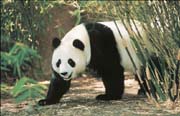 NAME: The giant panda is a single species, Ailuropoda melanoleuca, related to
bears. It is classified as rare by the International Union for Conservation of Nature and Natural
Resources (IUCN). It is protected under appendix 1 of the Convention on International Trade in
Endangered Species (CITES). There are thought to be about 1,000 individuals in the wild.
NAME: The giant panda is a single species, Ailuropoda melanoleuca, related to
bears. It is classified as rare by the International Union for Conservation of Nature and Natural
Resources (IUCN). It is protected under appendix 1 of the Convention on International Trade in
Endangered Species (CITES). There are thought to be about 1,000 individuals in the wild.
PHYSICAL DESCRIPTION AND HABITAT: The giant panda is found exclusively in China where it
inhabits mountain forests that are dense with bamboo and conifers. They thrive in altitudes of
5,00 to 10,000 feet and are accustomed to torrential rains and dense mist throughout the year.
HUNTING CHARACTERISTICS: These black-and-white bears eat
primarily bamboo, up to 40 pounds per day. They also have been known to eat other plants and
flowers as well as hunt for fish, pikas and other small rodents. Pandas can spend up to 16 hours
a day feeding.
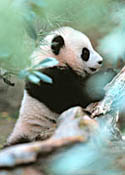 INTERESTING FACTS: Pandas are solitary animals. Males and females come together
only for a short time during breeding season. Females are receptive to males for
only a few days every year. Normally, a single cub is raised each year. The giant panda gestation
period is 3-5 months. Cubs are often weaned at about nine months but may remain with their mother
for up to 18 months.
INTERESTING FACTS: Pandas are solitary animals. Males and females come together
only for a short time during breeding season. Females are receptive to males for
only a few days every year. Normally, a single cub is raised each year. The giant panda gestation
period is 3-5 months. Cubs are often weaned at about nine months but may remain with their mother
for up to 18 months.
 Pandas are sexually mature at about 6 years of age and they have a captive life expectancy of
20-30 years. Their vocal repertoire consists of bleats, honks, squeals, growls, moans and barks.
Pandas are sexually mature at about 6 years of age and they have a captive life expectancy of
20-30 years. Their vocal repertoire consists of bleats, honks, squeals, growls, moans and barks.
Here is a link to the San Diego Zoo's Panda Central Facts page:
Panda Facts